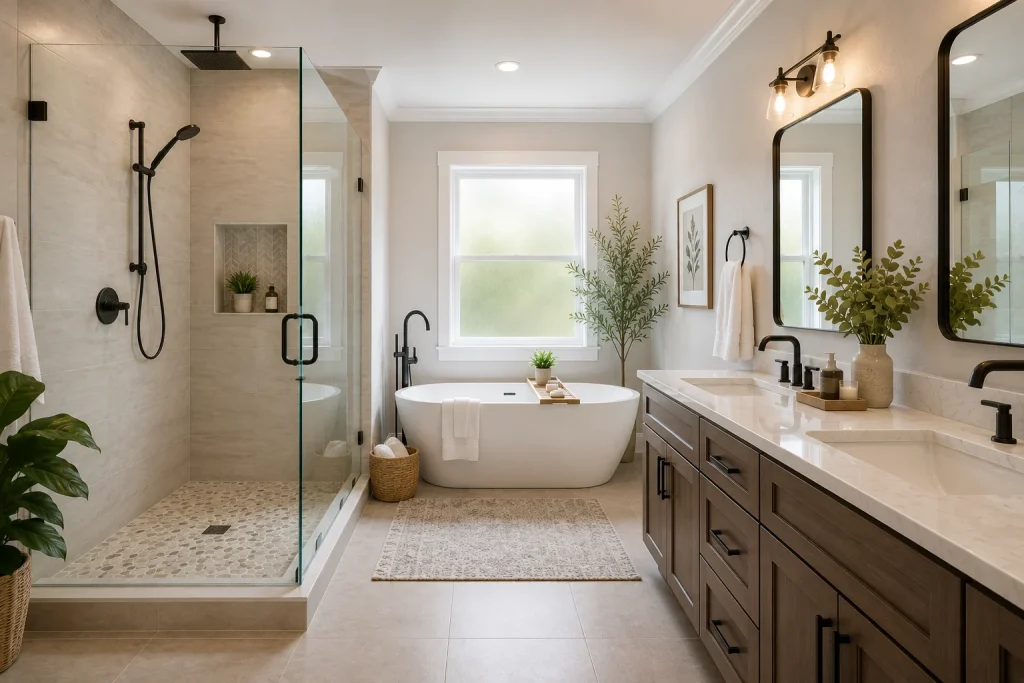
A bathroom may be one of the smaller rooms in a home, but remodeling it requires careful planning. Plumbing, waterproofing, ventilation, electrical systems, lighting, storage, flooring, fixtures, and finishes all need to work together in a relatively compact space. For homeowners considering bathroom remodeling in Central Florida, the goal should go beyond creating a more attractive room. A successful renovation should improve functionality, durability, comfort, moisture management, storage, safety, and the overall experience of using the space every day. This guide explains the most important decisions to consider before beginning a bathroom renovation, including layout, showers, tubs, tile, waterproofing, ventilation, lighting, accessibility, budgeting, and contractor selection. Start by Identifying What Is Wrong With the Existing Bathroom Before selecting tile, faucets, cabinetry, or paint colors, identify the problems the remodel needs to solve. An outdated appearance may be one reason for renovating, but homeowners often discover that functionality is equally important. A bathroom may have insufficient storage, poor lighting, inadequate ventilation, a difficult-to-clean shower, limited counter space, outdated plumbing fixtures, or a layout that no longer meets the household’s needs. Common goals for a bathroom remodel include: Replacing an outdated bathtub or shower; Creating a larger walk-in shower; Improving storage and vanity space; Updating tile and flooring; Improving ventilation; Adding better lighting; Replacing plumbing fixtures; Improving accessibility; Creating easier-to-clean surfaces; Modernizing the overall design; Increasing comfort and functionality. Homeowners planning more extensive improvements can also explore the residential remodeling services offered by CF Construction throughout Central Florida. Bathroom Layout Should Be Planned Before Materials Bathroom design is highly dependent on space. Toilets, vanities, showers, tubs, doors, storage, and circulation areas all compete for a limited footprint. For this reason, the layout should be determined before homeowners become committed to specific finishes. Questions to Ask About Your Current Bathroom Layout Is the vanity large enough for everyday use? Does the door interfere with fixtures or circulation? Is the shower appropriately sized? Is there enough storage? Would removing a bathtub create space for a larger shower? Are plumbing fixtures positioned efficiently? Does the bathroom need better accessibility? Is there enough room for more than one person to use the space comfortably? Maintaining plumbing fixtures close to their existing locations can sometimes simplify a project, while relocating plumbing may provide a substantially better layout. The right approach depends on the existing conditions, renovation goals, and budget. A contractor should evaluate these factors before demolition begins. Walk-In Shower or Bathtub: Which Is Better? One of the most common decisions in bathroom remodeling is whether to retain a bathtub, replace it, or convert the area into a walk-in shower. There is no universal answer. The best configuration depends on the household and the property. A Walk-In Shower May Be Appropriate When: The existing bathtub is rarely used; Homeowners want a larger shower area; Accessibility is a priority; The room would benefit from a more open appearance; Easy entry and exit are important. A Bathtub May Still Make Sense When: Someone in the household regularly uses a tub; The bathroom serves young children; The homeowner prefers soaking baths; The overall home layout benefits from retaining at least one bathtub. Some larger bathrooms can accommodate both a separate tub and a walk-in shower, while smaller bathrooms require homeowners to prioritize the feature that will actually be used most often. Waterproofing Is One of the Most Important Parts of a Bathroom Remodel Tile receives most of the visual attention in a new shower, but the materials behind the tile are equally important. A shower is a wet environment. Proper preparation, waterproofing, drainage, transitions, and installation techniques help prevent water from reaching areas that were not designed to remain wet. Waterproofing should therefore be considered part of the construction system rather than simply another finish selection. Areas Requiring Careful Moisture Management Include: Shower walls; Shower floors; Curbs and thresholds; Niches and shelves; Transitions around fixtures; Areas where different materials meet; Flooring near showers and tubs. This is particularly relevant in Florida, where homeowners already live in a warm and humid climate. A bathroom renovation should be designed to manage both direct water exposure and everyday moisture effectively. Ventilation Matters in Central Florida Bathrooms Bathrooms regularly generate significant amounts of moisture from showers and hot water. Without appropriate ventilation, humidity can remain in the room longer than necessary. A well-planned exhaust system helps remove humid air and supports better moisture management inside the bathroom. When remodeling, ventilation should be evaluated along with the room’s size, shower configuration, ceiling conditions, and existing exhaust equipment. Signs the Existing Bathroom May Need Better Ventilation Mirrors remain fogged for a long time after showers; Walls and ceilings stay damp; Paint or finishes deteriorate prematurely; The room feels excessively humid; The existing exhaust fan is ineffective or unusually noisy. Ventilation is not one of the most decorative parts of a renovation, but it can significantly affect how the completed bathroom performs over time. Choose Bathroom Flooring for Wet Conditions Bathroom flooring must handle moisture, frequent cleaning, foot traffic, and occasional standing water while remaining practical and visually compatible with the rest of the room. Homeowners should consider more than appearance when comparing flooring materials. Important characteristics include: Moisture resistance; Slip resistance; Ease of cleaning; Durability; Maintenance requirements; Compatibility with bathroom use; Visual continuity with adjacent rooms. Tile is commonly used in bathroom environments because of its versatility and water resistance, but the specific product, surface texture, grout selection, installation method, and maintenance expectations should all be evaluated. Bathroom Tile Should Balance Style and Maintenance Tile can define much of a bathroom’s appearance, particularly when it extends across shower walls, floors, niches, and feature areas. However, tile selection should also consider maintenance. Smaller tiles can create additional grout lines. Highly textured surfaces may behave differently during cleaning. Very large-format tiles can produce a different visual effect but may require careful planning around slopes, corners, fixtures, and cuts. When Selecting Bathroom Tile, Consider: Where the tile will be installed; Surface texture; Slip resistance where appropriate; Grout color; Cleaning requirements; Tile size; Layout and pattern; How the material coordinates with the vanity and countertops. The objective is not simply choosing the most attractive tile in a showroom. It is selecting a material that works within the complete bathroom design. Plan the Vanity Around Storage and Daily Use The vanity is often the primary storage area in a bathroom. Its design should reflect the number of people using the room and the items that need to be stored. A primary bathroom may benefit from double sinks, additional drawers, taller storage, or a larger countertop. A smaller guest bathroom may work better with a compact vanity that preserves floor space. Useful Vanity Planning Questions Include: Is one sink sufficient or would two be useful? How much counter space is needed? Are drawers more practical than cabinet doors? Where will towels and toiletries be stored? Will electrical outlets be conveniently accessible? How will mirrors and lighting relate to the vanity? Storage should be planned before the vanity is ordered rather than treated as an afterthought. Bathroom Lighting Requires More Than One Fixture Bathrooms need lighting for multiple purposes. Bright, functional lighting is important for grooming and everyday use, while softer lighting may create a more comfortable atmosphere. A lighting plan may include: General ceiling lighting; Vanity lighting; Mirror lighting; Shower-area lighting where appropriate; Decorative lighting; Natural light where available. Fixture positioning is particularly important around mirrors. Poor placement can create shadows exactly where homeowners need good visibility. Electrical planning should occur early in the renovation because lighting, switches, exhaust fans, outlets, mirrors, cabinetry, and walls often need to be coordinated. Consider Accessibility Before You Need It Accessibility features do not have to make a bathroom look institutional. Many can be incorporated subtly into a modern design. For homeowners planning to remain in their property for many years, it can be useful to consider how the bathroom might need to function in the future. Depending on the project, considerations may include: Lower or minimal shower thresholds; Walk-in shower configurations; Wider access areas; Thoughtful fixture placement; Slip-resistant flooring; Strategic reinforcement for future support features; Improved lighting. Planning these details during a renovation can be substantially easier than modifying a recently completed bathroom later. Create a Realistic Bathroom Remodeling Budget Bathroom remodeling costs can vary significantly because two similarly sized bathrooms may require very different amounts of work. Replacing finishes without changing the layout is different from relocating plumbing, rebuilding a shower, modifying walls, installing custom cabinetry, or changing electrical systems. Major Factors That Can Affect Bathroom Remodeling Cost Bathroom size; Demolition requirements; Shower construction; Bathtub replacement or removal; Plumbing modifications; Electrical work; Ventilation changes; Vanity and cabinetry selections; Countertops; Tile quantity and complexity; Flooring; Fixtures and hardware; Wall or structural modifications; Existing conditions discovered during renovation. A useful budget should distinguish between necessary work and optional upgrades. Homeowners should also maintain some flexibility for conditions that cannot be fully evaluated until demolition exposes the underlying construction. CF Construction states that financing is available for qualifying remodeling projects. Homeowners can contact CF Construction for an estimate and current financing information. Understand the Bathroom Remodeling Process Every renovation is different, but bathroom remodeling generally follows a sequence that allows the different trades and materials to be coordinated properly. Initial evaluation: identifying goals, existing conditions, and project scope. Planning: establishing layout, fixtures, materials, storage, lighting, and major selections. Demolition: removing the components included in the renovation and exposing areas that need to be rebuilt or modified. Rough construction: completing required framing, plumbing, electrical, ventilation, or related work. Waterproofing and preparation: preparing wet areas and surfaces for finish materials. Installation: completing tile, flooring, cabinetry, countertops, fixtures, and other components according to the project sequence. Finish work: painting, trim, hardware, adjustments, and final detailing. Final review: inspecting the completed project and addressing remaining details. Making major product and design decisions before construction begins can help reduce unnecessary delays and compatibility problems. Do Bathroom Remodels Require Permits in Florida? The answer depends on the scope of the project and the jurisdiction where the property is located. Simple cosmetic changes may be treated differently from projects involving plumbing relocation, electrical modifications, structural changes, ventilation systems, or other regulated construction work. Because permitting requirements can vary between cities and counties, homeowners in Bartow, Lakeland, Winter Haven, Davenport, Plant City, Brandon, Riverview, and other Central Florida communities should confirm which requirements apply to their specific property and scope of work. A qualified contractor can help identify which parts of the project may require permits, inspections, or additional coordination before work begins. How to Choose a Bathroom Remodeling Contractor A bathroom contains multiple construction systems in a small space. For this reason, workmanship and project coordination are especially important. Homeowners should evaluate contractors based on qualifications, insurance, relevant remodeling experience, communication, project scope, and the ability to coordinate the various phases of construction. Questions to Ask Before Hiring a Bathroom Remodeling Contractor Are you properly licensed and insured for the proposed work? What exactly is included in the estimate? Are demolition and disposal included? Who coordinates plumbing, electrical, tile, and other trades? How are project changes documented? What materials must be selected before construction begins? How will the surrounding areas of the home be protected? How will communication work during the project? CF Construction is a fully insured and licensed Florida contractor, license number CBC1269122. Homeowners can learn more about the company’s approach and experience on the CF Construction company page. Bathroom Remodeling in Bartow, Lakeland and Central Florida Bathroom renovation needs vary according to property type, construction, age, existing conditions, household needs, and budget. CF Construction serves homeowners throughout Bartow, Lakeland, Winter Haven, Davenport, Plant City, Brandon, and Riverview, providing residential remodeling services across Central Florida. Homeowners considering a bathroom renovation can view the company’s Bathroom Remodeling project showcase and explore additional residential remodeling services in Central Florida. Planning More Than One Home Renovation? Some homeowners remodel a bathroom as an individual project, while others are planning multiple improvements throughout the property. When several areas of the home need attention, considering them together can help create more consistent flooring, cabinetry, fixtures, finishes, colors, and design decisions. Kitchen and bathroom renovations, in particular, involve many similar planning considerations, including cabinetry, countertops, plumbing, electrical systems, lighting, flooring, storage, and finish selections. If a kitchen renovation is also part of your plans, read the complete guide to kitchen remodeling in Central Florida for additional planning guidance. Common Bathroom Remodeling Mistakes to Avoid 1. Choosing Tile Before Finalizing the Layout The layout determines dimensions, transitions, shower configuration, vanity placement, and many other material requirements. Plan the room before finalizing decorative selections. 2. Ignoring Waterproofing Beautiful tile does not replace a properly prepared wet-area system. Waterproofing and drainage should be treated as fundamental construction components. 3. Underestimating Ventilation A bathroom that looks new but retains moisture poorly may develop performance problems over time. 4. Prioritizing Appearance Over Storage Minimalist bathrooms can look attractive in photographs, but everyday toiletries, towels, cleaning supplies, and personal items still need practical storage. 5. Using Inappropriate Flooring Bathroom flooring should be selected for wet conditions, durability, maintenance, and safety, not appearance alone. 6. Waiting Too Long to Select Fixtures Plumbing fixtures, cabinetry, mirrors, lighting, and hardware can influence construction dimensions and rough-in locations. Late selections can complicate the project. 7. Hiring Based Only on the Lowest Price Estimates should be compared according to scope, qualifications, materials, responsibilities, and what is actually included. Frequently Asked Questions About Bathroom Remodeling in Central Florida How long does a bathroom remodel take? The timeline depends on the size of the bathroom and the scope of work. A renovation involving a new shower, tile, plumbing, electrical changes, cabinetry, or layout modifications will generally require more coordination than a cosmetic update. A project-specific schedule should be established after the contractor evaluates the work. Should I replace my bathtub with a walk-in shower? It depends on how the bathroom is used. A walk-in shower may provide easier access and additional shower space, while a bathtub may still be valuable for households that regularly use one. The overall bathroom layout and the presence of other tubs in the home should also be considered. What is the most important part of a shower remodel? Design and tile are important, but waterproofing, drainage, substrate preparation, plumbing, and proper installation are fundamental to long-term performance. Is ventilation important in a Florida bathroom? Yes. Bathrooms generate significant moisture, and Central Florida already has a warm, humid climate. Effective ventilation helps remove humid air and supports better moisture management in the room. Do I need a permit for bathroom remodeling in Florida? Permit requirements depend on the scope of work and the local jurisdiction. Projects involving plumbing, electrical systems, structural changes, ventilation, or other regulated work may have different requirements from cosmetic updates. Does CF Construction offer bathroom remodeling in Lakeland and Bartow? Yes. CF Construction serves Central Florida communities including Bartow, Lakeland, Winter Haven, Davenport, Plant City, Brandon, and Riverview. Does CF Construction offer financing? CF Construction states that financing is available. Homeowners should contact the company for current financing options and information applicable to their specific remodeling project. Plan Your Central Florida Bathroom Remodel A bathroom renovation should create more than a new appearance. The best projects combine layout, waterproofing, ventilation, storage, lighting, durable materials, and thoughtful construction into a space that performs well every day. Planning these decisions before demolition begins can make the renovation more predictable and help homeowners invest their budget where it produces the greatest functional and visual benefit. If you are considering bathroom remodeling in Central Florida, CF Construction provides residential remodeling services throughout Bartow, Lakeland, Winter Haven, Davenport, Plant City, Brandon, Riverview, and surrounding areas. Ready to discuss your bathroom renovation? Request a free estimate from CF Construction or call (863) 308-3097.